


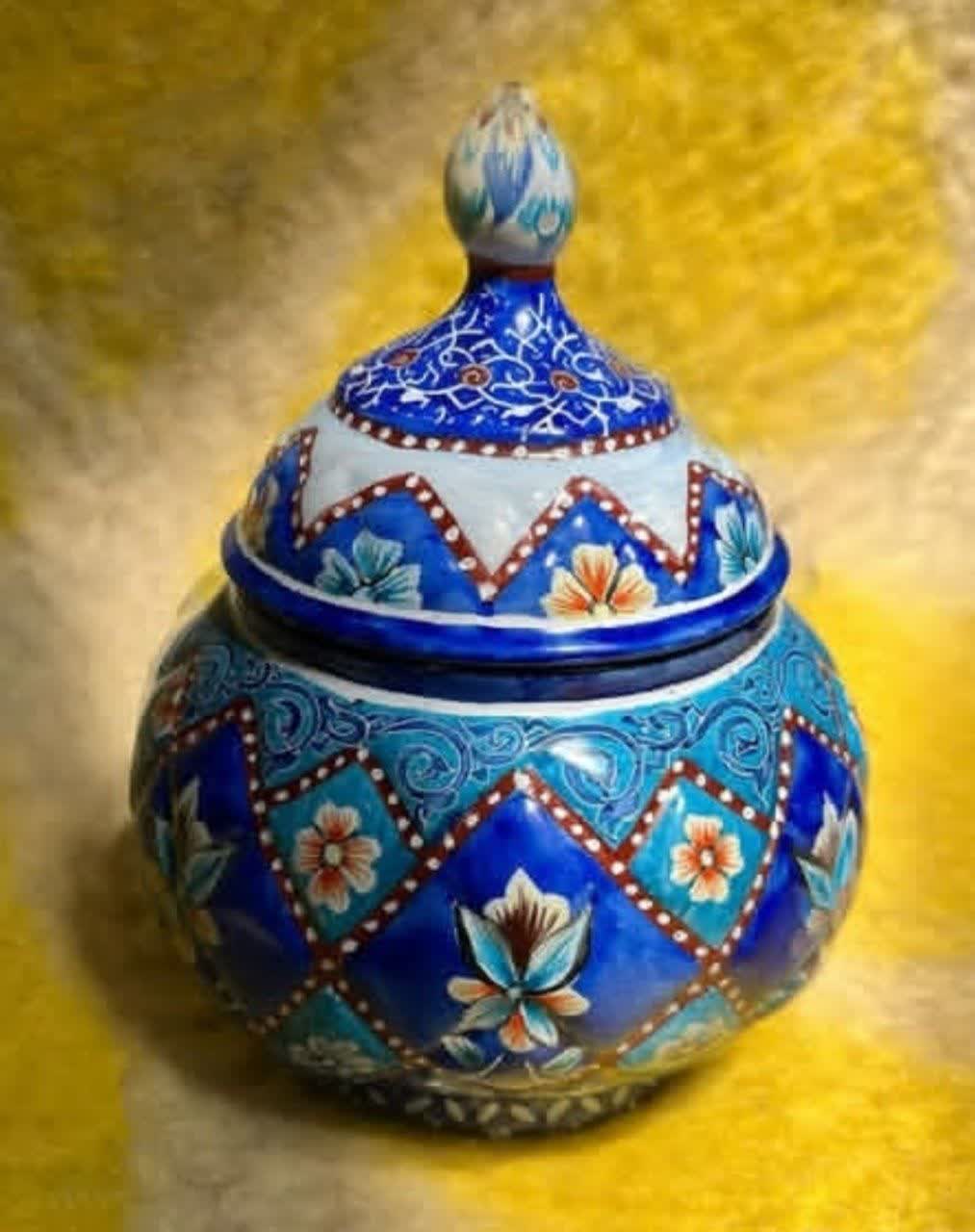
Background and history of enamel
Enamel is one of the oldest handicrafts in Iran, which is several thousand years old. The history of this art dates back to the Achaemenid and Sassanid eras; when Iranians, combining fire, soil and metal, created brilliant and lasting works. The peak of enamel flourished during the Safavid era; a period when Isfahan was known as the Center for Fine Iranian Arts. The enamel works of that time mostly included dishes, jewelry, spoons, frames and decorative items that are kept in today’s prestigious museums in the world.
What is enamel on metal?
Enamel or “painting mina” is an art in which the surface of the metal (generally copper, sometimes silver or gold) is covered with a layer of white glaze, and then traditional and slim designs with special colors are painted on it. After that, the effect in the furnace with a temperature of about 750 to 850 °C sees heat so that the colors stick to the glaze and metal. The result is a brilliant, durable, and colorful work that attracts every viewer.
Steps to make enamel on metalt.
Metal bed construction: First, the container or metal plate is made by the copper or the goldsmith.
Glaze: The metal surface is covered with white or transparent glaze.
Cooking in the furnace: The effect is heated at high temperature to stabilize the glaze.
Drawing and painting: The painter draws traditional designs such as flowers and chickens, slim or khati with mineral colors on the work.
Re-cooking: To stabilize the colors, the effect is placed again in the furnace.
Final coating: In the end, the work is made a transparent glaze to make the surface shiny and resistant.
The role and applications of enamel
Set. Today, a variety of products including:
Enamel plates
Pots and Bowls
Wall Frames
Jewelry (necklace, earrings, ring, bracelet)
Penders and decorative boxes
They are made with this art. These products are known as authentic Iranian handicrafts and have many fans both in Iran and abroad.
Value and position of enamel today
Metal enamel is not just a decorative art; it is a cultural heritage that has been passed down from generation to generation. Many foreign tourists are looking to buy enamel as a valuable souvenir when traveling to Iran, especially to Isfahan. On the other hand, in today’s modern world, this art has found a new place with new designs and a combination with contemporary decoration, and remains popular.